From Seed to Bottle: Sutr Wants You to Know Your Cooking Oil !

Share

Why Sutr Wants Indians to Start Tasting
Their Cooking Oil Again ?
Cooking oil enters almost every meal prepared in an Indian kitchen, yet it is rarely treated as an
ingredient in its own right. Consumers carefully select their rice, spices, vegetables and ghee, but oil is often purchased on autopilot judged primarily by price, familiarity or promises printed on the packaging. And Sutr wants to change that.
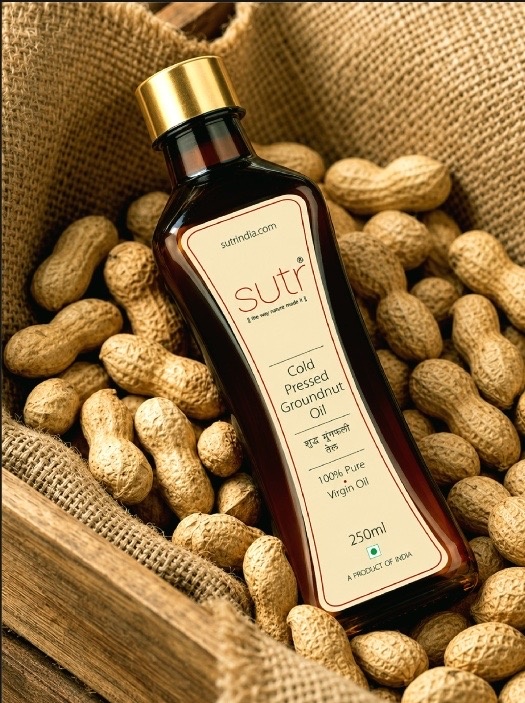
 This cold-pressed oil brand believes that cooking oil should contribute more than function. It should retain enough of its original ingredient for consumers to recognise where it came from. Groundnut oil should carry a gentle nuttiness, while mustard oil should preserve its naturally sharp aroma and distinctive character.
This idea sits at the heart of Sutr’s philosophy: the closer an oil remains to its source, the more of its sensory identity survives in the final bottle.
Most conventional cooking oils are designed to be neutral. Through multiple stages of industrial
processing, their original colour, aroma and flavour may be reduced to create a standardised
product. While this neutrality has become familiar to consumers, it has also changed the way oil
is perceived not as an ingredient, but simply as a medium for frying, sautéing or tempering.
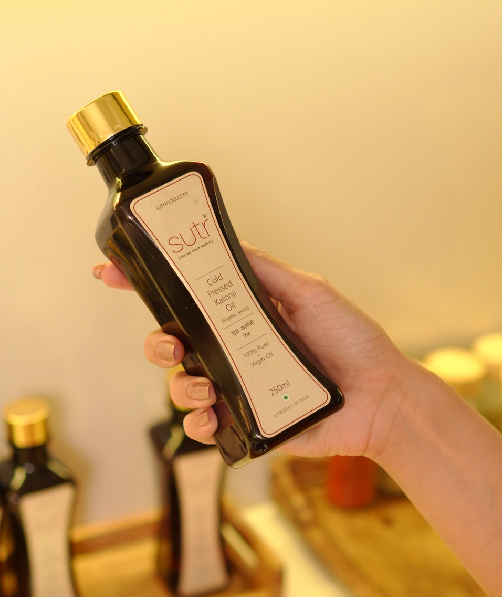 Sutr is questioning whether cooking oil needs to be invisible at all.
Through cold pressing, the brand focuses on minimal intervention between the seed and the bottle. The process is intended to preserve more of the ingredient’s natural aroma, colour and
flavour, giving consumers something they can experience directly rather than asking them to
rely entirely on health claims.
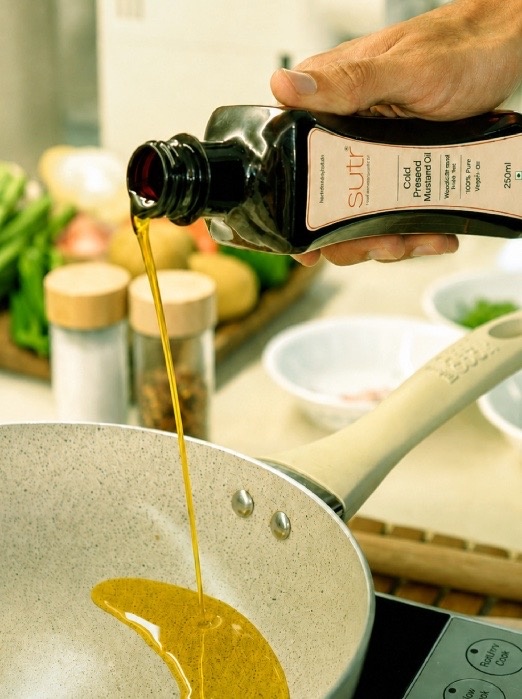
For Sutr, the smell released when mustard oil is heated or the nutty character of groundnut oil is
not an inconvenience to be processed away. It is part of the ingredient’s identity.
This approach also reconnects cooking oil with India’s regional food traditions. The flavour of Indian food has never depended on spices alone. The oil used to cook those spices has historically shaped the taste of a dish just as deeply. Mustard oil brings its own intensity to several northern and eastern preparations, while groundnut oil forms an important part of cooking across western India.
Replacing these oils with a completely neutral medium can change the character of a recipe, even when every other ingredient remains the same.
Sutr is therefore not asking consumers to think of cooking oil as a miracle wellness product. Its
proposition is simpler: pay attention to how the oil was made and notice what it brings to the
food. In a market crowded with health labels and sweeping promises, Sutr is placing its faith in
something more immediate the consumer’s own senses.
Because perhaps good cooking oil should not disappear into a dish. Perhaps it should still taste
like where it began.
 Sutr Is Asking Indian Kitchens to Trace
Their Oil Back to the Seed
Indian consumers are becoming increasingly curious about the origins of their food. They want to know where their coffee was grown, how their flour was milled, which variety of rice they are eating and whether their produce was sourced locally.
Yet one of the most frequently used ingredients in the Indian kitchen continues to remain largely
anonymous: cooking oil.
A bottle may mention the type of oil it contains, but that rarely tells the complete story. Where did the seed come from? How was the oil extracted? How much processing took place before it reached the shelf?
And what remains of the original ingredient inside the final bottle?
These are the questions Sutr wants to bring into everyday kitchens. The brand’s philosophy begins with the idea of distance not simply the physical distance an ingredient travels, but the distance created through processing. The more an oil is altered
between the seed and the bottle, Sutr believes, the harder it becomes to recognise its original
character. That is why the brand positions cold pressing as a process rather than merely a packaging
claim.
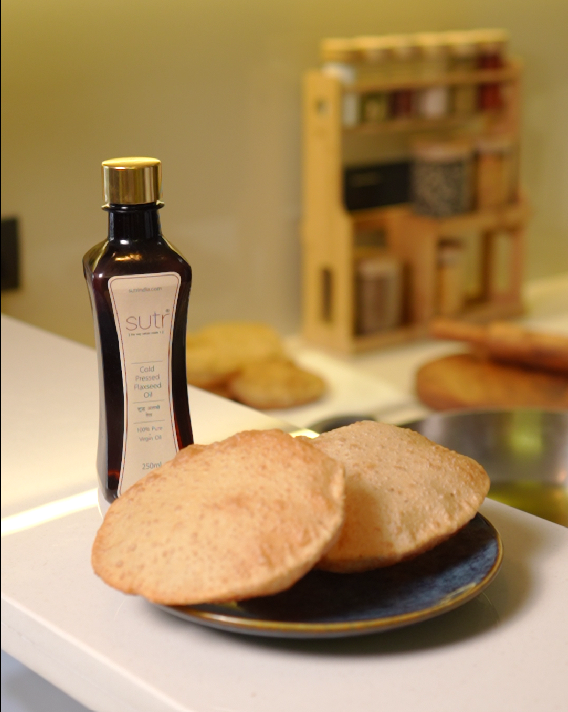 Cold pressing mechanically extracts oil at relatively low temperatures. Compared with extensively refined oils, cold-pressed varieties generally retain more of the seed’s original colour, aroma and flavour. This allows the consumer to experience the ingredient more directly. Sutr’s mustard and groundnut oils have been developed around this source-led approach.
Instead of treating cooking oil as an interchangeable liquid, the brand wants each oil to retain its
own identity.
A mustard seed and a groundnut are not the same ingredients. They carry different aromas, flavours and culinary associations. Yet industrial standardisation has encouraged consumers to expect cooking oil to be almost colourless, odourless and flavourless.
Sutr challenges that expectation. Its broader argument is that traceability should not end with knowing an ingredient’s name. Meaningful traceability should also include understanding what happened to that ingredient after it left its source. This becomes especially relevant in a category where words such as “natural, “pure” and “healthy” appear frequently. Such descriptions may sound reassuring, but they do not always help consumers understand how a product was actually
Sutr wants the conversation to move from promises to process.Rather than presenting oil as a medical solution, the brand defines better oil as one that has
undergone minimal intervention and remains close to what the seed naturally offered. Its most immediate proof is sensory: the aroma, colour and flavour that survive into the bottle and eventually enter the food. The idea could change how Indian households evaluate an everyday purchase. Instead of asking only,
“What does this oil cost?” they may begin asking,
“Where did it begin, and what happened to it along the way?
For a product used almost every day, those are surprisingly uncommon questions. Sutr believes it is time Indian kitchens started asking them.